Just outside the old city walls of Florence, a few minutes’ walk from Piazza della Libertà, there’s a park most visitors never hear about. The Giardino dell’Orticoltura (Horticultural Garden) hides a spectacular 19th-century greenhouse of iron and glass, a hilltop garden guarded by a giant dragon, and some of the most peaceful benches in town.
If you’ve had enough of the lines and the crowds in the historic center, this is a great place to catch your breath. Here’s what to see, a bit of history, and everything you need to plan your visit.
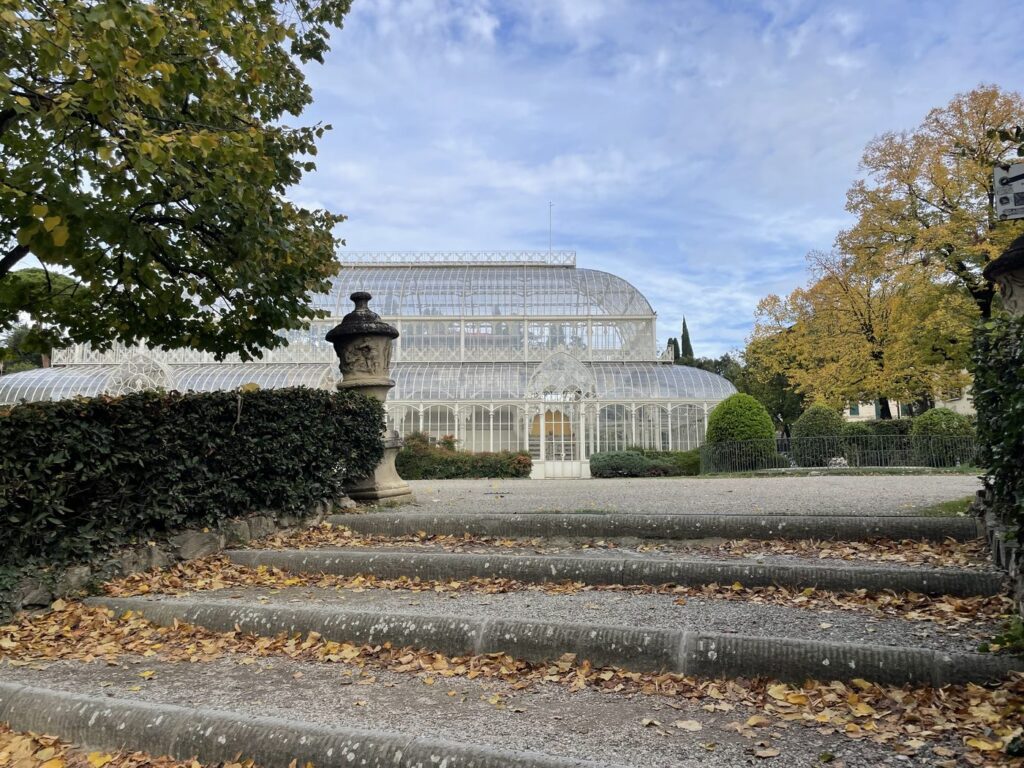
Table of Contents
Why Visit the Giardino dell’Orticoltura
This isn’t a polished tourist attraction: it’s a neighborhood park, and that’s exactly its charm. When I visited in early November 2026, most of the people strolling along the gravel paths were locals walking their dogs or simply taking a quiet break surrounded by greenery.
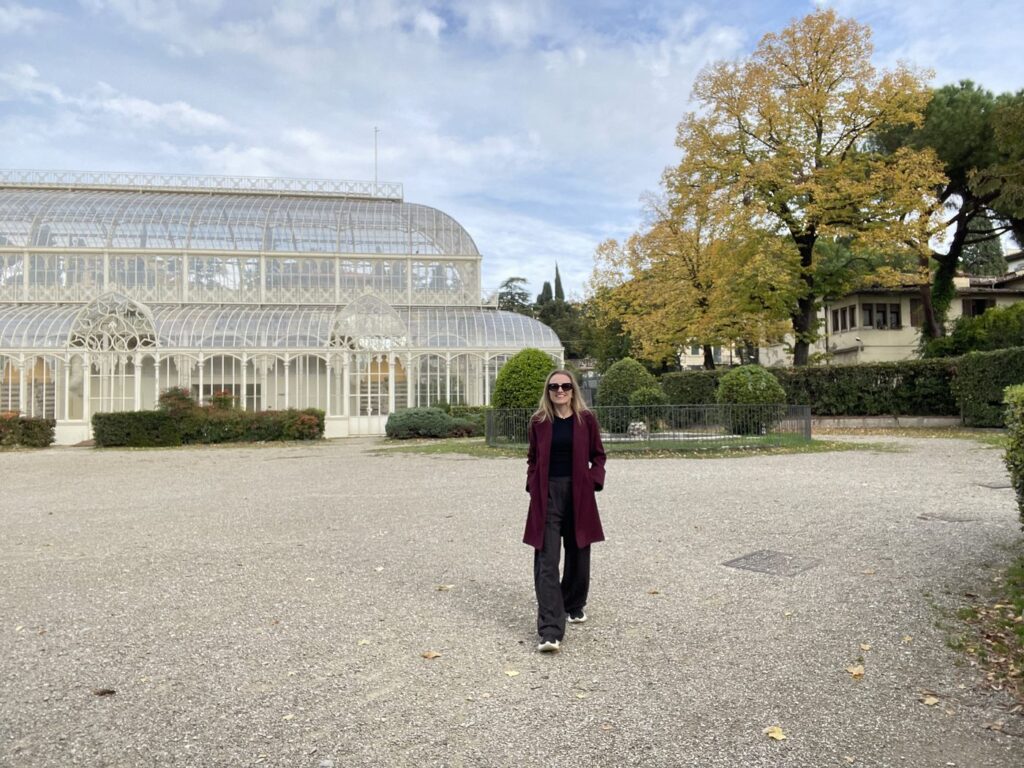
Fall is a lovely time to come. The big trees turn gold, the lawns fill up with leaves, and the white greenhouse looks even brighter against the autumn colors.
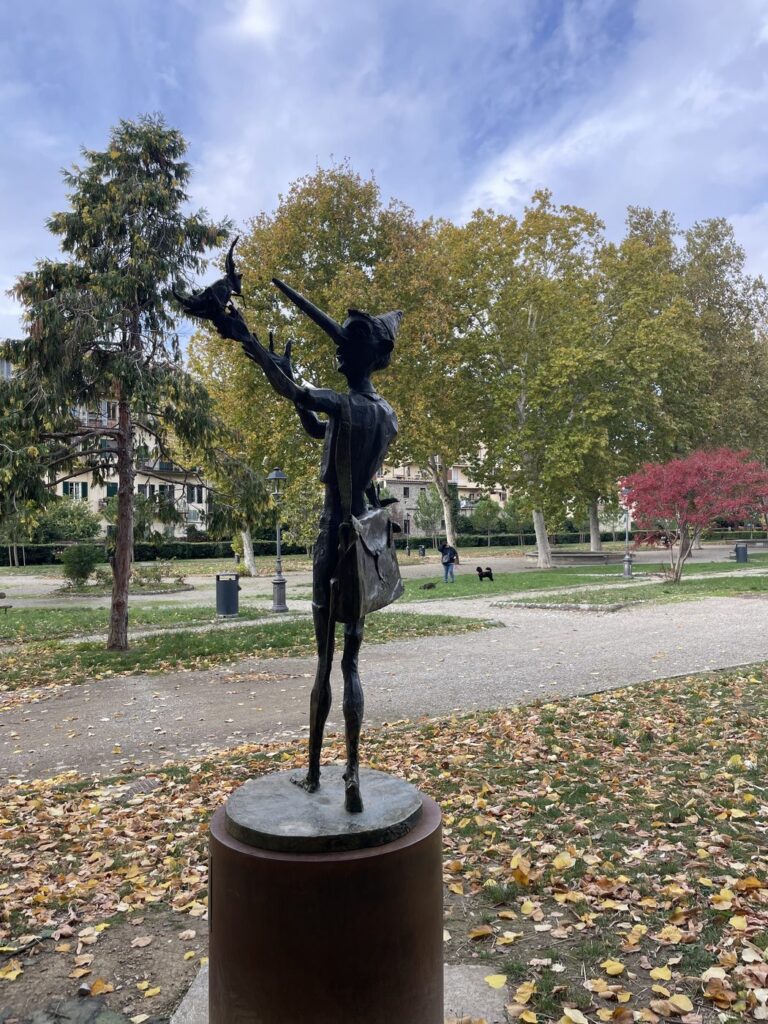
While you wander, look for the statue of Pinocchio on the lawn. The wooden puppet was created by Carlo Collodi, a writer born in Florence, so he feels right at home here.
It’s the kind of place where you slow down: no tickets, no lines, just benches, lawns and the occasional neighbor chatting with their dog.
👉 Looking for ideas on what to do in Florence? Download the GetYourGuide app and get 5% off the first activity you book, in Italy or anywhere else.
📩 Ask for your code here (it arrives automatically by email). More info.
The Tepidarium: Florence’s Glass Palace
The star of the garden is the Tepidarium (Tepidario in Italian), a huge greenhouse designed by architect Giacomo Roster. It was inaugurated on May 18, 1880, for the first National Exhibition of the Italian Horticultural Federation.
According to the City of Florence, it’s 38.5 meters (126 feet) long, 17 meters (56 feet) wide and up to 14 meters (46 feet) tall, with more than 650 square meters (about 7,000 square feet) of floor space. Its metal frame, made by the Officine Michelucci of Pistoia, rests on 24 cast-iron columns.
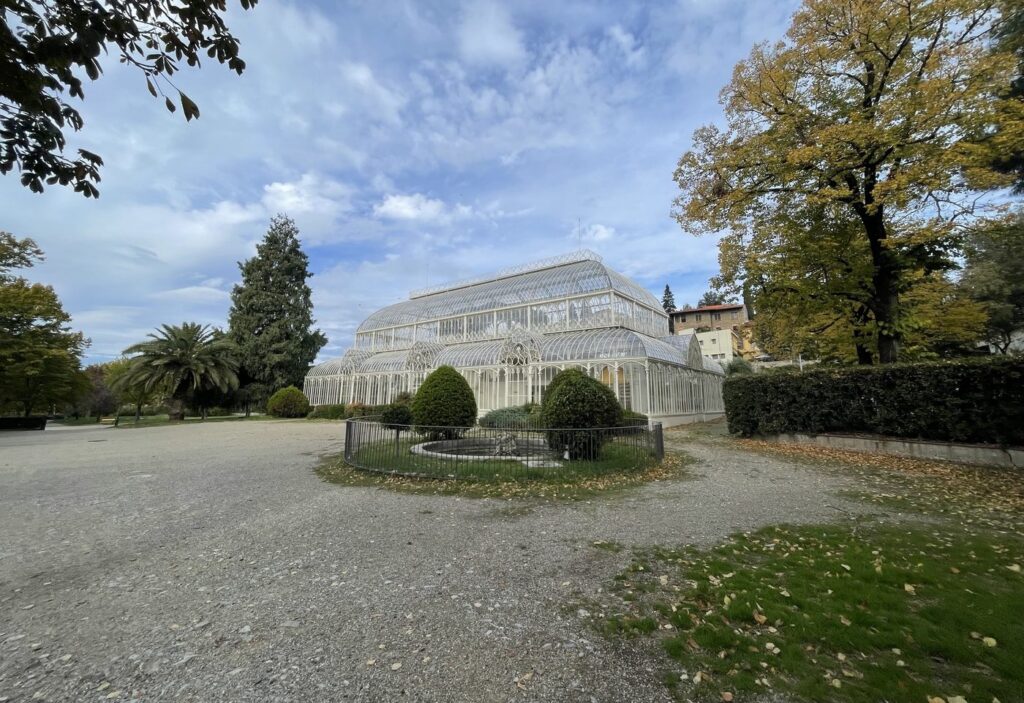
Tuscany’s official tourism website calls it the largest greenhouse of its kind in Italy.
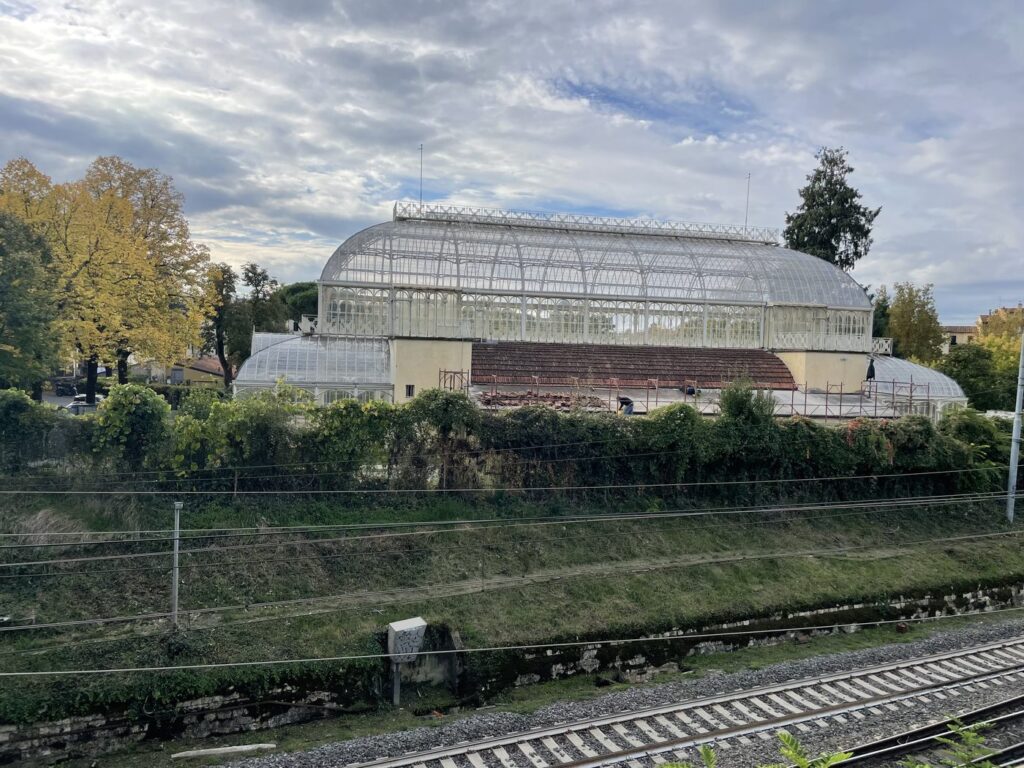
After nine months of restoration work, costing 270,000 euros, the City of Florence reopened the Tepidarium on October 2, 2026. Worn polycarbonate, cast-iron and steel parts were replaced, and the roof now has an automated ventilation system.
That said, when I stopped by on November 4, 2026, workers were still busy on part of the building and I couldn’t go inside. The Tepidarium often hosts exhibitions and events, so if seeing the interior is the main reason for your visit, check before you go.
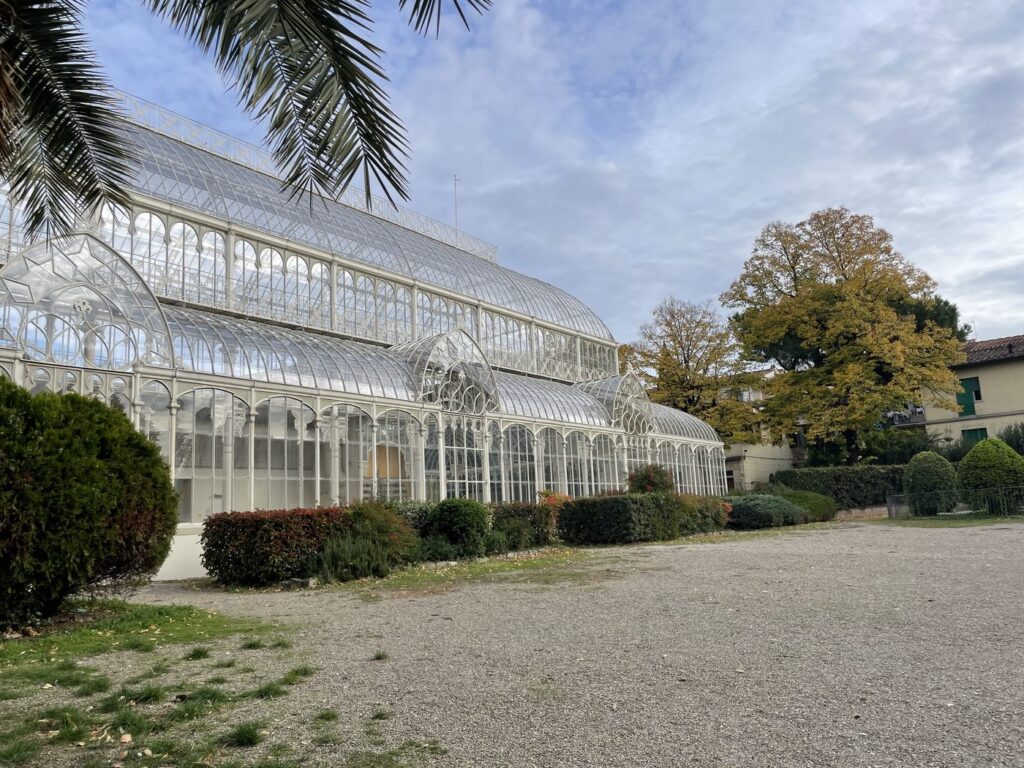
The best chance to get inside is during the plant and flower fair (Mostra di piante e fiori) organized twice a year by the Società Toscana di Orticultura, with growers selling plants and flowers in the garden and in the Tepidarium. In 2026, the spring edition ran from April 25 to May 3 and the fall edition from October 2 to 4. Dates change every year, so check the Society’s website before planning around it.
A Little History of the Garden
The garden’s story starts in 1852, when Florence’s Accademia dei Georgofili, the city’s historic academy of agriculture, set up a commission to create a horticultural society for Tuscany. Two years later, in 1854, the Società Toscana di Orticultura was founded, and it’s still active today.
In the late 1850s, the Society found land just outside the Porta San Gallo gate, at the start of Via Bolognese. That’s where the garden was born, and where the Society began holding its plant shows.
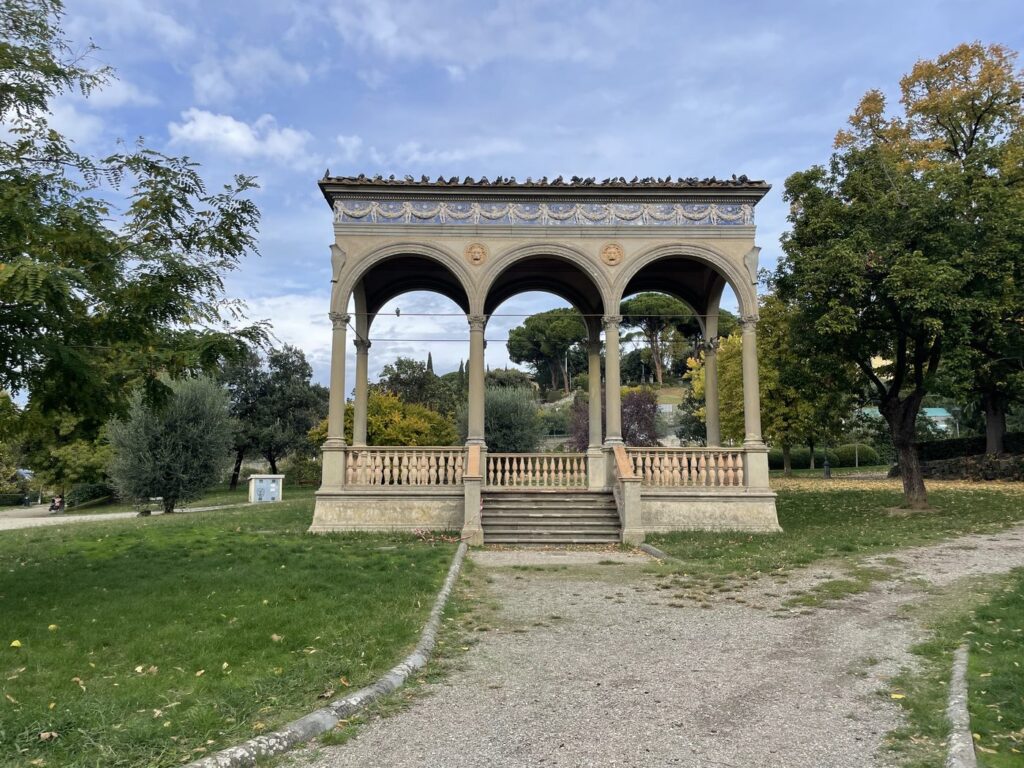
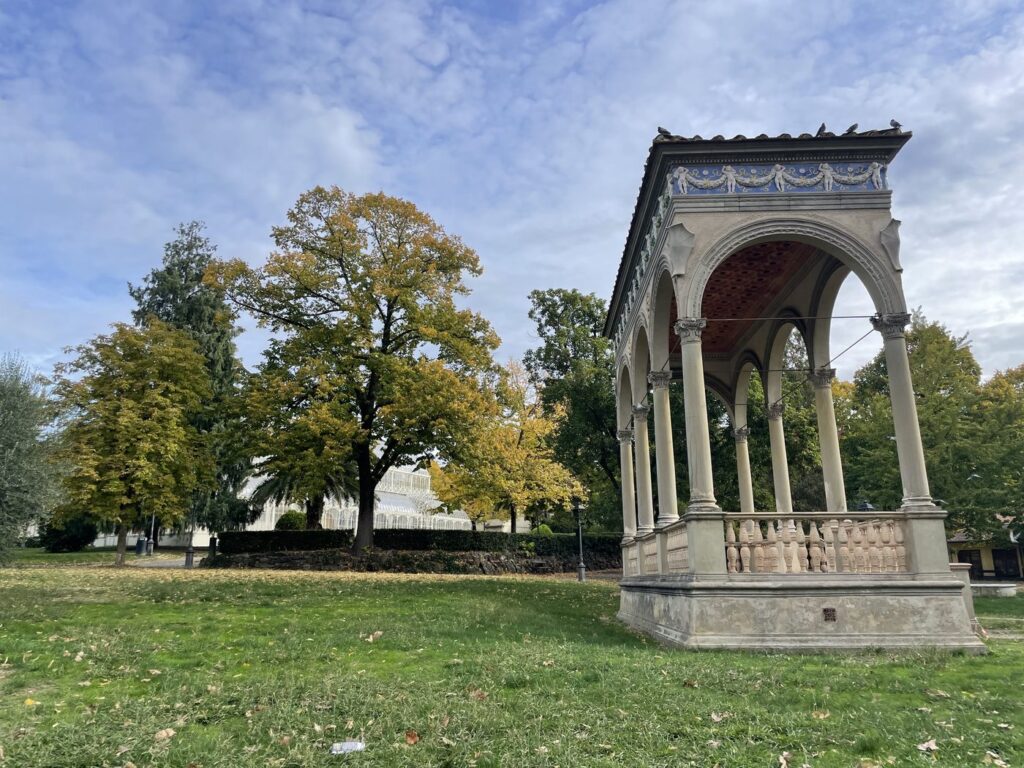
In the middle of the lawn stands the Loggetta Bondi, an arcaded pavilion built in 1911 and topped by a blue-and-white frieze of garlands.
In the early 1930s, the City of Florence bought the garden and turned it into a public park.
Climb Up to the Giardino del Parnaso
Don’t leave without climbing up to the Giardino del Parnaso (also called Orti del Parnaso), the hillside garden on the other side of the railroad tracks. You reach it through a pedestrian passage over the railroad.
On the staircase you’ll meet the garden’s most famous resident: a giant dragon winding its way up the steps. According to Florence’s official tourism website, this serpent-shaped fountain was completed in 1990, based on a design by architect Marco Dezzi Bardeschi.
At the top, benches look out over the rooftops of Florence, with Brunelleschi’s dome on the skyline. If you have time, bring a book and linger for a while: it’s a quiet spot to enjoy the city from above.
Keep an eye out for the signpost of the Cammino di San Jacopo, the pilgrimage route from Florence to Santiago de Compostela, which passes through both gardens. According to the sign, Santiago is 2,559 kilometers (about 1,590 miles) away by land.
Opening Hours, Admission and How to Get There
The main entrance is at Via Vittorio Emanuele II, 4, north of the historic center, and there’s a second entrance on Via Bolognese. The easiest way to get there is on foot from Piazza della Libertà, the square with the Porta San Gallo gate.
According to the City of Florence signs at the gardens, checked in November 2026, the Giardino dell’Orticoltura and the Giardino del Parnaso keep the same hours all year round:
- Monday to Saturday: 7:00 AM to 8:00 PM
- Sundays and public holidays: 8:00 AM to 8:00 PM
Admission is free. Dogs must be kept on a leash, and the signs ask visitors to leave the garden in case of strong wind or heavy rain.
More Gardens to Explore in Florence
Love gardens? Pair your visit with the Boboli Gardens behind Palazzo Pitti, the Botanical Garden (Giardino dei Semplici) near Piazza San Marco, or the Bardini Gardens.
In spring, add the Giardino dell’Iris near Piazzale Michelangelo, which opens for only about a month a year. In 2026, according to Florence’s official tourism website, it was open from April 25 to May 20, with free admission. Just below Piazzale Michelangelo you’ll also find the Giardino delle Rose, the city’s rose garden.
If you enjoyed this article, you can support my work with a coffee here ☕
Another way to support Tuscany.Tips is by booking with one of our trusted partners below — at no extra cost to you.
FIND YOUR NEXT STAY
Book your stay in Italy or anywhere in the world with our partner Booking.com!
You'll find the best deals and support our website. Thank you!
BOOK TRANSFERS AND TOURS ONLINE
Book transfers, tours, and excursions in Italy and around the world with our partner Get Your Guide.
NEED DATA IN ITALY?
Get 5% off your Holafly eSIM with code TIPS—fast, easy, and reliable!