Firenze Déco at Palazzo Medici Riccardi is the kind of exhibition that makes perfect sense in Florence, but may still surprise many visitors. Running from April 2 through August 25, 2026, the show looks at the city through the lens of the 1920s, when ceramics, fashion, advertising, textiles, design, and craftsmanship all helped shape a new idea of elegance.
Rather than focusing on a single artist or one narrow movement, Firenze Déco. Atmosfere degli anni Venti opens a wider window onto a period when Florence was actively participating in the visual culture of modern Europe. For travelers spending a few days in the city, it is also a chance to see a different side of Florence, away from the usual Renaissance-heavy itinerary.
Table of Contents
Tickets for Firenze Déco
Visitors planning to see Firenze Déco. Atmosfere degli anni Venti at Palazzo Medici Riccardi can use the ticket link below to check availability and purchase admission online.
| Date | Event | Online Tickets |
|---|---|---|
| April 2 to August 25, 2026 | Firenze Déco, Palazzo Medici Riccardi, Florence | PAST EVENT |
The exhibition is open daily from 9:00 AM to 7:00 PM, with last entry at 6:00 PM, and it is closed on Wednesdays.
Get instant internet access as soon as you touch down in Italy with a Holafly eSIM. Use the Holafly Promo Code TIPS to save on your plan. Read our full guide here.
Why this Florence exhibition stands out
Florence is often introduced through medieval streets, Medici history, and world-famous Renaissance art. This exhibition shifts the timeline forward and shows the city at another fascinating moment, when it was redefining itself through applied arts and luxury production.
Organized by Fondazione MUS.E and promoted by Città Metropolitana di Firenze, with Lucia Mannini as curator, the exhibition presents Florence as a place where tradition and innovation met in especially sophisticated ways. The 1920s were not treated here as a decorative afterthought, but as a period of experimentation, ambition, and cultural energy.
That makes the show appealing even for visitors who do not usually seek out decorative arts exhibitions. It is not just about beautiful objects. It is about how style travels across cities, industries, and social worlds.
What you will see inside the exhibition
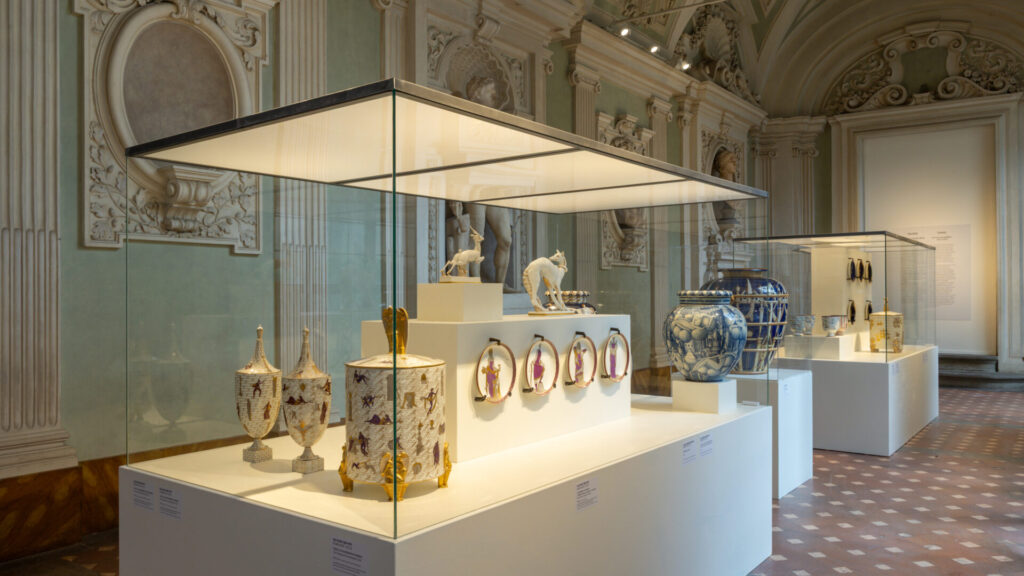
The exhibition brings together ceramics, furnishings, jewelry, fabrics, clothing, posters, and other objects that help reconstruct the atmosphere of the 1920s. There is a strong sense of variety throughout the route, which keeps the show visually engaging.
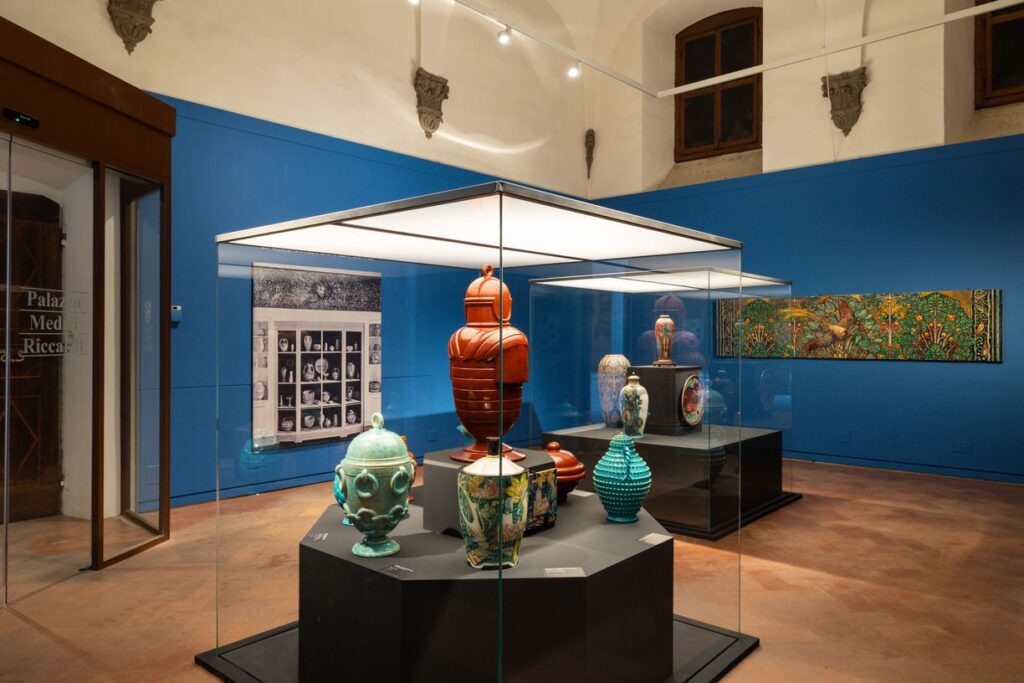
Among the highlights are works connected to Gio Ponti and Richard-Ginori, ceramics by Galileo Chini, creations by Thayaht, jewelry associated with international high society, and early Florentine production linked to names that would later become global references, including Ferragamo and Gucci.
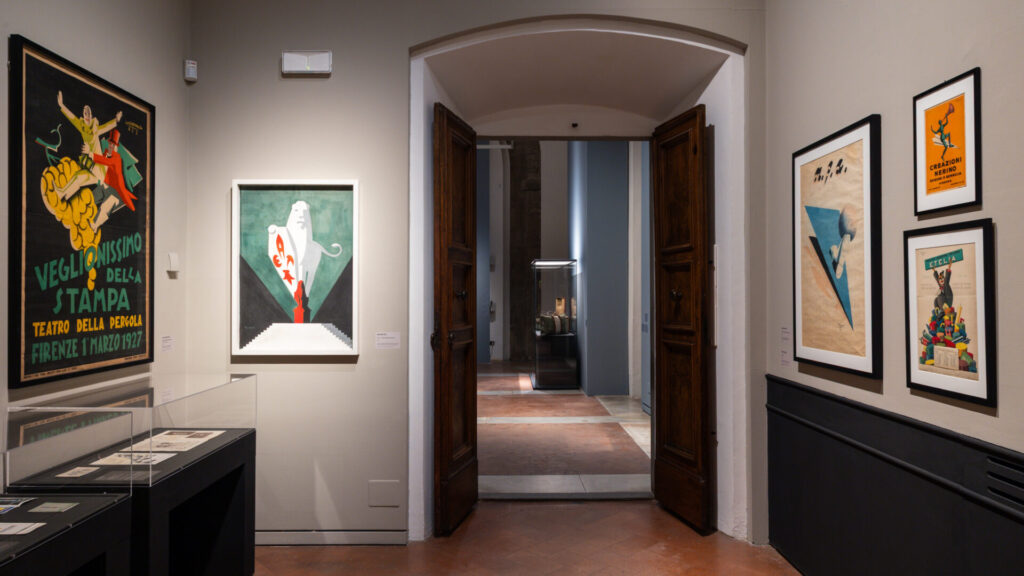
Advertising also plays an important role in the exhibition, which is one of the reasons the show feels broader and more alive than a traditional design display. Posters and graphic works help illustrate how visual language was changing in the period, as modernity became something to be sold, staged, and desired.
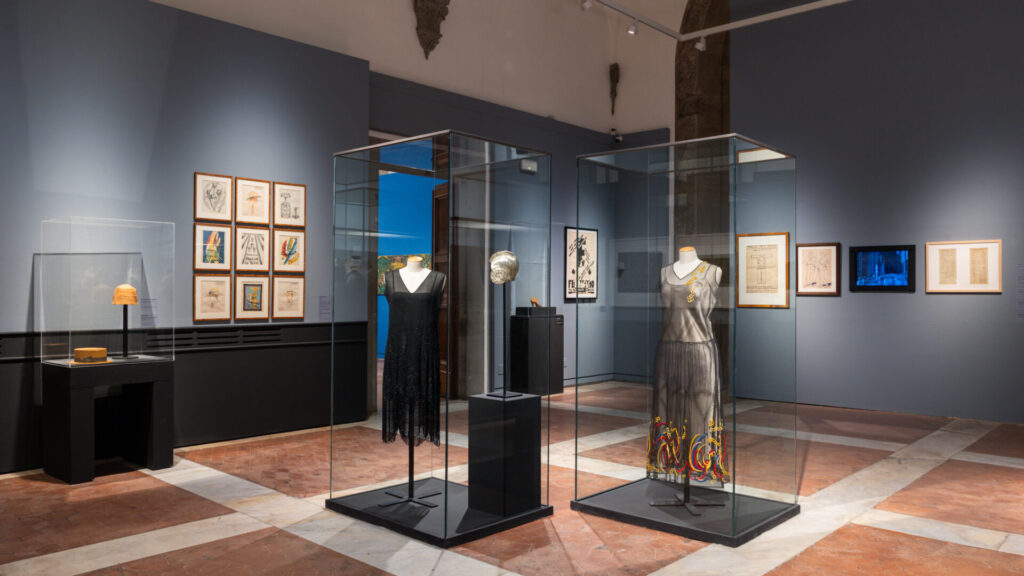
Fashion and textiles are also part of the story, adding another layer to the exhibition’s portrait of Florence. Instead of isolating art from daily life, the show makes clear how closely aesthetics, commerce, craftsmanship, and lifestyle were intertwined.
Florence, Paris, and the international spirit of the 1920s
One of the exhibition’s strongest ideas is that Florence was not developing in isolation. The show places the city within the larger international context shaped by the 1925 Exposition Internationale des Arts Décoratifs et Industriels Modernes in Paris, the event that effectively gave Art Déco its name and global momentum.
That connection matters because it helps explain why Florence became such an important center for applied arts during the period. After World War I, Italy experienced a renewed interest in craftsmanship and decorative production, not only as artistic expression but also as a productive and economic force.
Florentine artists and manufacturers were part of that broader movement. The exhibition underlines this by tracing exchanges, influences, and shared ambitions rather than presenting Florence as a purely local case. That wider frame gives the show more depth and makes it easier for international visitors to place what they are seeing.
From ceramics to fashion: a different way to understand Florence
For many visitors, Florence is a city of paintings, churches, and sculpture. Firenze Déco suggests another reading. It highlights Florence as a center of style, materials, craftsmanship, and visual reinvention.
A substantial section is devoted to ceramics, especially the role of Richard-Ginori in the 1920s and the renewal associated with Gio Ponti. Other Florentine-area manufacturers also appear, including Cantagalli and the Fornaci San Lorenzo led by Galileo Chini. The exhibition also looks at the decorative arts biennials of Monza, which were key in shaping a modern Italian language for applied arts.
Elsewhere, visitors encounter the world of fashion, accessories, and artisanal production, including an elegant Gucci travel set and material connected to Salvatore Ferragamo, who chose Florence as the base for his business during that decade. One especially memorable episode from the period is the Tuta designed by Thayaht in 1920, conceived as a universal and functional garment and promoted in an unusually forward-thinking way.
Together, these sections create a fuller picture of Florence as a city where luxury, experimentation, and craft were closely linked long before the idea of Italian lifestyle became a global brand.
Looking for ideas on what to do in Tuscany? Download the GetYourGuide app to discover tours, tickets, wine tastings, day trips, and local experiences across the region. New users can email promo@tuscany.tips with the subject line GetYourGuide Offer and receive the first-booking offer within a few minutes. More info here.
Guided tours and an extra Déco stop in Florence
The exhibition is accompanied by guided tours every Saturday and Sunday at 3:00 PM. On Sunday mornings, families with children ages 4 to 9 can join the workshop Creazioni d’artista, in stile déco. Reservations can be made via info@palazzomediciriccardi.it or by phone at +39 055 2760552.
There is also an extra opportunity tied to the exhibition that may interest architecture and design lovers. Thanks to a collaboration involving Art e Dossier and Giunti Odeon, visitors can join free visits to the former Teatro Cinema Savoia, inaugurated in 1922 and now known as Giunti Odeon, one of Florence’s distinctly Déco spaces.
These visits are scheduled at 10:00 AM, 11:00 AM, and 12:00 PM on the following dates:
April 18, 2026
May 16, 2026
June 13, 2026
July 11, 2026
August 22, 2026
Reservations open on the Monday before each visit.
If you enjoyed this article, you can support my work with a coffee here ☕
Another way to support Tuscany.Tips is by booking with one of our trusted partners below — at no extra cost to you.
FIND YOUR NEXT STAY
Book your stay in Italy or anywhere in the world with our partner Booking.com!
You'll find the best deals and support our website. Thank you!
BOOK TRANSFERS AND TOURS ONLINE
Book transfers, tours, and excursions in Italy and around the world with our partner Get Your Guide.
NEED DATA IN ITALY?
Get 5% off your Holafly eSIM with code TIPS—fast, easy, and reliable!